Tuesday, August 2, 2022

Open Posts, Closed Works, Other Worlds: part 2

II. A libidinal genre

Isekai appears as an experiment in how to pack as much libidinal drive as possible into works that also require at least a bare minimum of plot and characterization. Formally, the genre is defined around a character or characters being transported to and living in another world: isekai translates as "different world" or "otherworld". But a core part of any isekai work is Freudian eros – sexuality, power, popularity, creativity. The main characters of isekai therefore sometimes resemble Mary Sues / Gary Stus, but without an authorial self-insertion element: instead the reader or viewer is encouraged to identify with the character.

In terms of medium, isekai can be a novel, a manga, an anime, a video game, or other specialized variants such as light novels. This multi-media nature is a core part of how isekai transforms from fanfic into mass entertainment, a process that I'll describe later on. Isekai are almost always serial in form.

What are the core moves of isekai, in a libidinal sense?

* Sexuality: the main character must attract the attention of sexually attractive people who want to sleep with them, often for no immediately apparent reason. In the majority of isekai, these are women or girls attracted to a man or boy, but they can be of any gender, as can the main character. Because isekai is in theory made for adolescents, this continual sexual appeal often occurs without any actual sex going on – one of the most unbelievable aspects of the genre, given that the main characters are most often older teenagers.

* Power: the main character has some potentially world-changing ability and becomes one of the important people in their new world. This can be magical combat strength, contemporary knowledge or technology in a pseudo-medieval setting, unusual capacity for development, fated heroism, super-competence at some activity that is not magical or technological per se, or a wide range of other devices. Crucially, the character almost always starts out as weak in perception or reality, because an always super-powerful character would be perceived as a bully and not invite reader / viewer identification. (1) This weakness is referred to throughout the isekai but is quickly subverted, often right at the beginning of the series.

* Popularity: everyone comes to admire the character, or if they hate the character this is an initial weakness as above. They are not merely individually powerful but are seen to be powerful in society and within forms understandable by that society. Similarly, even if they were previously an isolated, alienated individual they quickly make fast friends and enjoy close companionship.

* Creativity: killing is part of most isekai, but it is rarely the main expression of enjoyment of power for the main character. The main focus is usually creative: figuring out how to improve a society, discovering magic and researching spells, starting businesses, setting up trade, constructing buildings, cooking.

Within these requirements there are multitude of formal variations. The transition of a character to another world is either done through direct transfer of some kind (commonly, the character is somehow transported into the world of an RPG video game through a malfunction in the game's virtual reality system) or through reincarnation. Any case one can think of within these limits has been attempted: reverse isekai where fantasy characters are transported to our world, the main character as putative villain in the new setting, the main character as super-skilled before reincarnation instead of ordinary, the reincarnation fulfilling some unmet goal in the character's past life or as a manipulation for some sinister purpose. There are often comic elements, including those that play off of the tropes of the genre.

But within this formal variation there is a strange consistency of setting. Most often, the other world is a pseudo-medieval fantasy world that is immediately recognizable as the generic form of a Dungeons & Dragons descended RPG, complete with attack magic, monsters, character classes, and levels. The themes of reincarnation and demiurgy (2) are quite visible: reincarnation is the most common way of transferring a character to another world in isekai, while the most common method used in older stories or other genres (the Urashima Tarō Japanese folk tale, Narnia, some Lovecraft stories) is a door between worlds. Demiurgy is present in that the gods involved in this reincarnation or the creation of the other world almost never have a sense of the numinous: they are played for laughs, for erotic appeal, are fairy-tale guardian spirits, or are relatively friendly antagonists.

This initial recognition of the influence of RPGs is followed by a sense (for someone whose main experience is with TTRPGs) that something is off, that something else has intervened. What has intervened is the role-playing video game form.

Character abilities are not just numericized, they are viewable (via a "status scan" or similar) to the character or others within a world, as they are within most computer games of this type, and as they are not within almost all TTRPGs. Almost all isekai with this setting have an "adventurer's guild" that the characters join which provides posted jobs that the characters can do and offers measured ranks. This is not a common element of TTRPGs, but early video game RPGs had a building like this as a typical form of design because it was a convenient hub for players to progress through the game with some element of choice about which part they did next.

Why would isekai have descended from computer game RPGs instead of TTRPGs directly? I don't know enough to answer this question: I imagine that it has something to do with how by the time RPGs reached mass popularity in Japan they had mostly migrated to computer form. But they evidently have, and the difference is important because it is a difference between an open and a closed form. (I mean these mostly in a sense derived from Umberto Eco, which I'll get into later.) In a TTRPG, in theory you can do anything, because the entity creating the game world is a person. In a computer game one, you can't: your options are limited by the programming of the game. Even in an MMORPG (massively multiplayer online RPG) like World of Warcraft with 20+ million players, players can talk to each other and even act as communities, but their options are fundamentally set and can not be quickly changed.

A multitude of minor variations within a formally closed and libidinal system: this is the basic design of many popular genres that isekai takes to a limit. In the next part I'll write briefly about Umberto Eco, open vs closed works, and why people enjoy closed works.

next part of the series

Endnotes

1) The process of giving a character with amazing abilities or drive a weakness so they don't appear to be a superhuman might be called "Vorkosiganation" after a character of Lois McMaster Bujold's. That popular SF series neatly pairs its main character's birth to wealth and power with his birth defects that make people regard him as a despised mutant: each book pairs his successful efforts with another serious medical injury.

2) Of course reincarnation is a belief of Buddhist and Shinto religion, and what I refer to as demiurgy might be better expressed through the Shinto idea of kami: spirits that do not have omnipresence, omniscience, or omnipotence. These ideas are not necessarily transmitted to this genre along with the overt RPG baggage: they are part of Japanese culture. There is also a classical line of descent of the idea that is European: for instance in Plato's Republic Book X, Chapter III there is the question of what kind of life you would best choose if reincarnated and the story of how Odysseus wisely chooses to be reborn as a common person. But the element of conscious choice and the retention of knowledge from a previous life also occur in Tibetan Buddhism.

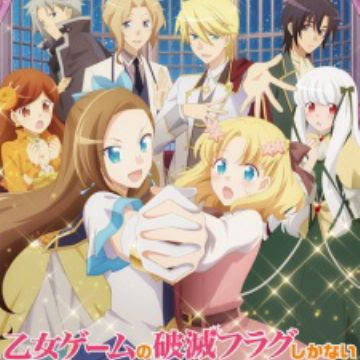
3) Images above: a statue of Eros from Freud's collection, a scene from the isekai _My Life As a Villainess_, an unknown scene that I downloaded and promptly lost the reference to, a scene from the isekai _Restaurant To Another World_, a scene depicting a typical RPG Adventurer's Guild complete with job posting board.

Monday, August 1, 2022

Open Posts, Closed Works, Other Worlds: part 1


(a meditation on RPGs, isekai, fanfic, and some ideas of Umberto Eco)

I. Introduction: religious rites

If you are an older person, as I am – or perhaps a younger person in a particular subculture – you may have played what is now called a Table-Top Role Playing Game or TTRPG. At once the terminology betrays that this is already an old phrase. These games used to simply be known as RPGs before home computers made widespread computer gaming possible and they had to be distinguished from role-playing video games. The core and representative example of this kind of game is Dungeons & Dragons, but there are now some people who have played this as a computer game and have never played a tabletop version at all. At any rate, if you've never played one, they are basically what the kids play in _Stranger Things_.
Really, anyone bothering to read this probably knows what a TTRPG is, or at least can glance at the wiki page. But it's important to distinguish them from other forms of RPGs for reasons that I'll get into later in the series: table-top RPGs are formally open, while computerized forms are more or less closed.

A few years after I started to play what were later called TTRPGs, I realized that these games involve an ersatz form of religious practice. This has nothing to do with the religion(s) *in* the game, which usually involve an invented pantheon that is nevertheless flavored by popular ideas about medieval Christianity. Nor do they have anything to do with the recurring moral panics in the US about the game encouraging Satanism or belief in magic. They have to do with reincarnation and demiurgy.

First, reincarnation. Play a TTRPG for a while, and eventually your character will die, usually from mischance. What you do then is grieve, and then you roll up a new character – you use the game's creation method to start again with a different persona. Or perhaps the Game Master does not run the kind of game where player characters commonly die, or you don't play a single campaign for that long. In that case whenever you start a new campaign or try a new system, there the character creation step is again. It becomes apparent that this is a kind of play-practice for a form of reincarnation: you yourself perform the part of a soul that sequentially animates a number of imagined bodies. This doesn't mean that TTRPG players end up believing in reincarnation, but it is a form of repeated practice, connected with emotion, that reinforces it as a vague folk idea.

Next, demiurgy. The Game Master or Dungeon Master in one of these games creates the world, both its original form and as a description of what you sense and what happens in response to everything that you do. This person clearly occupies the place of God for the invented world – not one of the gods within the world-setting, who you can sometimes fight and defeat, but the real creator and animator of everything. At the same time, you are aware that this is an ordinary person, one of your acquaintances or friends, who may be called on to DM for the group because they are somewhat better at it than the rest of you but is not superhuman. Therefore, they are a demiurge, the artisan-creator of a world who is not the real, ultimate creator. Gnosticism, the religious tendency most associated with the idea of a demiurge, usually views the demiurge as either ignorant or misguided: to quote wiki "his act of creation occurs in an unconscious semblance of the divine model, and thus is fundamentally flawed, or else is formed with the malevolent intention of entrapping aspects of the divine in materiality."

These two religious ideas are transmitted in latent form through every descendent of the table-top RPG, including the descendent genre known as isekai. In this process they travel from a small-scale communal medium to a mass media product that notably starts out as fanfic, a form of fanfic that is publishable because it has escaped copyrighted characters in favor of an uncopyrighted setting. Isekai reveals something about how a set of creative problems in mass culture have been solved, beginning with the RPG in the mid-1970s.

next part of the series

End notes:

1) I've written some scattered text about the general case of demiurgy as it applies to fiction, especially science fiction or fantasy where the writer creates the world as well as the characters that inhabit it. Most of this was written more than 20 years ago and hardly seems worth recovering. In general, the creation of a fictional world is referred to in one of three ways depending on whether it's given positive, neutral, or negative valence: subcreation, worldbuilding, or demiurgy. (Subcreation is Tolkien's word, which makes it very well studied: worldbuilding is what people teach when you take an SF writing course.)

2) I was unsure where to start with this set of ideas but decided that RPGs made the best starting point. It is not chronologically the earliest form out of the set (RPGs, isekai, fanfic): isekai might be considered to have started earlier if you include texts like C.S. Lewis' _Narnia_ books or Michael Moorcock's _Eternal Champion_ (I don't: I think the genre as such is Japanese) and fanfic has been in existence for as long as published fiction and notably took on its contemporary meaning with _Star Trek_ fanfic in the late 1960s.

3) The illustration I've chosen for the demiurge is a character actually named Demiurge from the popular isekai _Overlord_: it's probably fan art but I got it from google image search and I'm not sure how to credit it. Crediting fan work is one of the important problems that the makers of isekai managed to address.

Monday, May 30, 2022

Addressing the dead

Adam Roberts, Sibilant Fricative: Essays & Reviews (2014)

(attention warning: this is only about Adam Roberts' book in a tangential and self-indulgent sense)


"Boo! Now the only time I'll get to read you is when I buy your books, which I can't do, because they're not on the Kindle. Boo!" -- blog comment, SEK 30 June 2012 12:42:00 GMT-7

1. Rohan Maitzen, The Worth of our Work (2012)

https://rohanmaitzen.com/tag/los-angeles-review-of-books/

This quite good blog post sets out the basics of what happened: Adam Roberts decided to close down one of his blogs in order to publish collected excerpts from it as a book.  (Future textual critics may be confused: the blog closed down was called Punkadiddle, the book of excerpts from Punkaiddle was called Sibilant Fricative, and a new blog of essays and reviews was started that was also called Sibilant Fricative.).  The post quickly gets into the basic matter at hand: why should anyone write anything?

There are almost immediate complications.  By "close down", Roberts didn't mean that he was merely not writing on that blog any more and perhaps closing comments: he also deleted the blog posts themselves in an effort not to affect sales of the book.  As a result, all of the links in Rohan Maitzen's first paragraph are broken.  Perhaps that doesn't matter because after all these pieces made it into the book?  It is true that Roberts' posts about Robert Jordan's Wheel of Time were the most popular posts on the blog, and were printed in the book, but Maitzen goes on "As a Victorianist, though, I found posts like this one of the greatest value to  my own thinking."  What is that cryptic first link?  Something about G.K. Chesterton and Charles Dickens, and therefore not reprintable in a book of science fiction and fantasy essays and reviews.

The core sentence here -- quoted in Maitzen's blog post, from Adam Roberts' blog post -- is "If the sort of thing I write is worth paying for then I’m a mug to give it away for free; and if it isn’t worth paying for (of course a great deal of online writing isn’t) then I’m wasting everyone’s time, including my own, carrying on."

There are clear problems with this, but -- wait, there's a quote by one Rich Puchalsky, which reads "It’s very easy for people to say that the value of an activity is not measured in what it earns… but part of the monetization of attention is that yes, really, it is hard to say whether written work that people don’t pay for is valued."  I seem to have agreed, but this doesn't quite sound like all I would write: I must have written something else as well.

Of course most of this material is not really *gone* in a final sense.  I went to the Internet Archive, I navigated their horrible calendar interface, and found:

https://web.archive.org/web/20140821200721/http://punkadiddle.blogspot.com/2012/06/end.html

And there it is, if you scroll down to the 10th comment: the quote above, prefaced by "it's a continuous question as to whether I should be participating in blogging / commenting at all".  This, in an American idiom, should perhaps be called "joshing", and it means "If you're wasting your time by carrying on writing things that people won't pay for, think of what mugs we must be for writing comments on things that people won't pay for."  

Because of course writing-about-writing is, in contemporary terms, primarily a fan activity. People do it because it's fun and they are interested in the material, not because of the horrible monetization of everything that our society tries to impose.  The most characteristic form of fan writing, the fanfic, is completely unpublishable for money because it violates intellectual property rights (with rare exceptions such as 50 Shades of Grey, originally a Twilight fanfic.) People attempt to escape monetization by doing precisely things like this, and while (as Rohan Maitzen quotes Tom Lutz) "the future for every writer requires food", a writer who wrote purely out of determination to make money would find much easier paths to this end.  Non-hack writers seem to write because they want to write, and continue writing even when not paid.

And this seems true of Adam Roberts as well. In other places (citation needed), he has mentioned that writing down things on a blog somewhere is a part of his process, and it seems probable to me that he's going to continue doing it even with no one fronting the bills.  The immediate continuation of Sibilant Fricative the blog is a case in point.  A second and soon a third book of essays and reviews have been published from this blog, with the blog posts ceremoniously deleted once published, and so it goes.

Web publication is a form of publication, and the replacement of a Web publication in favor of book publication is a kind of death: the traces of a community replaced by a fossilized object.  This is what our society does to everything: dead labor becomes a commodity, dead trees become paper, dead links become a internet archive that is now critical for the functioning of society but must be supported as a wealthy person's hobby because after all it does not make money.


"I heard something about what you’re going through, and is there any way I can help distract you?  If you want to be distracted." -- Email from rpuchalsky1@gmai.com to scotterickaufman@gmail.com, sent Nov 19, 2016

2. Rich Puchalsky, Yawnpiphany, 2009

http://rpuchalsky.blogspot.com/2009/02/yawnpiphany.html

As a work of SF criticism I think that this holds up, although it also has highly cringy phrases like "strapping your inner fanboy down Clockwork Orange style".  Why would a reasonably skilled SF writer purposefully write a boring book?  If SF is the literature of ideas, then the only way to rebel is to be anti-ideas.  If fantasy is about adventure, then the way to iconoclasm is anti-adventure.

This idea was sparked by the parody neologisms in Adam Roberts' piece on Neil Stephanson's Anathem, which includes"yawngasm".   This piece is in the Sibilant Fricative book, it's one of the better ones, and the neologisms are still there, some used in other essays in the book and, really, of use in general SF criticism.  

But this is not the core puzzle in Sibilant Fricative.  The core puzzle is about the boring books that were *not* written for aesthetic effect.  Bad writers exist and some write boring books, but why do these get published and, in some cases, become extremely popular?

Adam Roberts suggests an explanation, credited to someone else, in the section on Robert Jordan's Wheel of Time.  (Though the piece on Wheel of Time comes at the end, it's the core of the book).  This is a well-known syndrome in which an author first writes something relatively good or at least competent, which becomes popular, then the writer extends this to a series which becomes progressively less edited and more stretched out as they keep the profitable content alive at all costs.  One can hardly fail to see this in George R.R. Martin's Song of Ice and Fire books, J.K. Rowling's Harry Potter books, or you prefer film the Star Wars movies and their following prequels.  

This is part of it.  But part of it is that boredom is what, in many cases, readers are looking for.  I refer to the "tired mind".


"Why do we become intellectual masochists when suffering from mental fatigue?" -- https://acephalous.typepad.com/acephalous/2006/02/duped_by_fools_.html, 2006

3. The shadow of the waxwing

In exasperation at his own masochistic decision to read through thousands of pages of the Wheel of Time books, Adam Roberts writes that he understands the desire to escape (pg. 254):

"We're all a bit ground down by life, I know.  We all want to get a little drunk, from time to time, so as to ameliorate the grind, to step through the portal to somewhere more appealing.  But getting drunk doesn't have to mean sitting on a park bench with a 2-litre plastic bottle of strong cider.  It is possible to get something more refined from the experience.  [...]  With books the difference in quality is not reflected in the cover price! Maybe it should be.  Maybe it ought to cost 1.99 to buy a Robert Jordan novel and and 45.99 to buy a Vladimir Nabokov one. But it doesn't!  Amazingly, it doesn't!  There is nothing stopping you going for the higher quality experience!  Honestly!"

But there really is.  I suggest that Adam Roberts is clearly an unusually prolific writer and reader and is not well qualified to judge from his own experience.  I'll try not to generalize from my own experience, but it is inconceivable that I could simply read through all of Vladimir Nabokov's books.  I have read two of Vladimir Nabokov's books decades ago, and I still think about them whenever something calls them to mind.  I could scarcely dare to just jam a third one in there: who knows what would happen.  No, I spend most of my days researching and thinking about how global warming is steadily destroying life on Earth, and when I'm done with that I don't want to really think at all.  I want to read something that is completely predictable and will not surprise me, especially not with some kind of unpredictable aesthetic effect.  Currently I'm reading R.A. Salvatore's Drizzt books, which hold my interest well enough in the half hour before I fall asleep.

Of course, no one who would be reading this could subsist on endless, interchangeable descriptions of Drow matron mother plottings alone.  Some kind of stretch is required sometimes, even if one doesn't feel up to Nabokov's oeuvre.  This is why I read Adam Roberts: his books have structure yet are not clones of each other.  This lack of predictability is one of the reasons why they are not fit for occupying the tired mind, and really most of us are most often tired minds.


"That's real money for him, which you've denied by passively looking for his books." -- blog comment, SEK June 25, 2010 at 2:24 PM

4.  Rich Puchalsky, Coda (2010)

http://rpuchalsky.blogspot.com/2010/06/coda.html

This piece does not work.  Nothing happens, the end is wincingly male-gaze (sparked by Adam Roberts' comment that in the later books of Wheel of Time Robert Jordan really likes to depict women who like to be spanked), the whole best left unlinked even here.   Even the comments concern an attempt at joshing, once again, that did not work.  

Will any of these references still be comprehensible when you read this?  They are still there as of May 30, 2022, but of course at some future time link rot will take them.  This piece itself may last somewhat longer.  But of course it will certainly never be published in the traditional sense. Even if it is archived, it will not remain meaningful.

I bought a copy of Adam Roberts' book Sibilant Fricative in 2022 because someone decided to make a TV series out of Robert Jordan's Wheel of Time, and Adam Roberts' blog posts about it were gone from the Web and I wanted to see if they held up now that there was a somewhat coherent TV series to set out the derivative story.  In the main, they did.  I laughed a good deal at the joke about how Perrin should be nicknamed Reginald, because of The Fall and Rise of Reginald Perrin, although probably fewer and fewer people will now get that reference.  It's uneven, but basically a good book.  You should buy it.


Monday, May 31, 2021

global warming activism II (a poem)

 black-swooping over a land of no ice

I will reincarnate as a corvid

(don't know what kind nature will provide)

I will fly and see your body lying bloated

I will alight and eat your eyes


in compassion I will feed and they will be gone

no one will ever again see as you did


did you hide in a bunkered place?

that lasted you for years the door too thick for pounding

then you died and got thrown out,

a body will smell up a dead place fast

and there it lies outside


nothing particular about eyes

just easiest to pull out, skin is tougher


did you die innocent outside?

poor soul none of us are innocent

you scrabbled then your kids killed you

after all you cursed their lives first

and they left you uncovered


nothing particular really about how we see

all of us saw the world the same way


only one life is pledged though

being a corvid doesn't seem bad

but only one life to remove this way of seeing

then go on and let it go, let it rot in the heat

and fly and see something else at last

Friday, August 21, 2020

Solar / Lunar

Rooftop ripples
Sun swings lazy
Down the gleaming gutter
And the tiles hot
Baking brittle, peeling
Chimney a squat idol
Golden brick worship

Sidewalk snail
Walking along slow
Heat rising
Concrete cracks
In rectangular pattern
Step step look down

Sea-bird swirl
Over the salt wind the silica
Beach blanket
Rough-weave, grainy
Glistening glare
Of the sun-bake
Low wind whisper

–- 'in the context of some art we must disintegrate and be reconnected with the passion of destruction' --

The moon's rare sinuousness
I can’t put my hand on it
Unearthly. It’s unearthly
How it looks warm and buttery from far
“A bit of handiwork – and he destroys the moon!”
But it always came back somehow

When I was young I thought about sight
A ground plan that burns and gnaws
Down all the formless places

what happens when
The sun goes down again? The pattern wears,
It's gone, no sudden flare will bring it back
The words where I scraped away the white part

(history shown to the sun looking on)
Autumn wind blows through my sleeve
Fallen and windblown, I can return to the fixed stars

Thursday, April 9, 2020

In a time of the plaque

walking in the park I
cleverly avoid the pave
pinecones crunching under
foot ant hills a resolute
few inches apart their
definition and industry
somehow a shock
the surround sound of
twitter and caw
all of that breeding
and working and
here is a bench
in memory of
someone wait if
I touch that plaque
I can't my face
your memory or my face
and wet sneakers
as I walk back
on the sodden grass

Friday, October 20, 2017

A bit more on left theses

Back in July, Bruce Wilder wrote a comment in reply to the post below. I wrote an answer which promptly and discouragingly got lost, but I'll write a bit more now, as well as some replies to other comments.

First, on fatuousness. Ideology is supposed to be more or less fatuous. What we need now is a system of belief that is actually widely believed: I wrote it as an outline because I think that those are the major elements that are required. Going into too much justification doesn't help. The "predictably produces" bit wasn't meant to be a claim of historical inevitability, only an observation that whatever supposedly differing choices are being made in different places now are leading to the same outcome everywhere.

The main point I'd make in reply is that ecological value can't really be our gold, because it's not tradable or exchangeable. Human work can not replace or make up for ecological work. If the reports of 75% of insect biomass going away are accurate and represent a widespread rather than local effect, there's no way we can work to make up for that, no way we can say that we'll exchange lower insect biomass for greater something else. We can try to stop doing whatever we're doing that's causing that effect, but that isn't an exchange: it's us trying to get out of the way of a disaster. Even in less fraught circumstances, you can't do things like say that we'll make up for taking more from an ecosystem over here by taking less over there: ecosystems don't generally work that way.

Money does loosely coordinate over scale, but that mechanism is exactly one of the things we should give up. The coordination is not very loose, as evidenced by the observation that we're in a world-system that is producing the same results everywhere despite local differences.

What would coordinate? Culture, essentially. The post below has a heading for "Societal values" where I was going to write something about how you can't very well have an anarchistic system (which this would be) unless people widely believe in it. The chicken-and-egg problem of how this would come about is best handled elsewhere, but cultural values are coordination over large distances.

Lastly there was another comment about how the left is based on universalist grounds... I don't see what can be more universal than the fact that we all live on and depend on a single planet whose systems are increasingly stressed by all of us. That is why US style "libertarianism" -- not liberators socialism, but the right-wing version -- is so attracted to science fictional dreams. Elon Musk describes his position as "I'm somewhere in the middle, socially liberal and fiscally conservative" and so can be taken as a representative of a type, and he would like Mars colonies. Why? Because that really is the only way to separate oneself from the universal community at this point.